Optimizing Nucleic Acid Extraction: The Engineering Perspective on Silica-Coated Magnetic Particles
SEO Keywords: Automated DNA isolation, silica magnetic bead optimization, nucleic acid purification protocol, magnetic bead binding capacity, biotech engineering, liquid handling systems.
The Evolution of Sample Preparation
Sample preparation is the foundation of any successful molecular assay. Whether it is Next-Generation Sequencing (NGS) or qPCR, the quality of the "input" determines the accuracy of the "output." Engineers in the life sciences sector are increasingly moving away from traditional centrifuge-based column purification toward automated silica magnetic bead systems.
The Physics of Magnetic Separation in Microfluidics
The primary advantage of silica magnetic beads in an engineering context is their "superparamagnetism." Unlike standard magnets, superparamagnetic beads exhibit magnetic properties only when an external magnetic field is applied. Once the field is removed, they lose their residual magnetism and can be easily resuspended.
This property is essential for:
-
Eliminating Clogging: Unlike spin columns, beads cannot clog, making them ideal for complex samples like whole blood, stool, or plant tissues.
-
Reducing Shear Stress: Magnetic handling is gentler on long-genomic DNA compared to high-speed centrifugation.
Solving the "Bead Settling" Problem
One of the greatest challenges for engineers designing automated workstations is the sedimentation rate of beads. If beads settle too quickly, the concentration of beads delivered to each sample will vary, leading to inconsistent yields.
-
Stokes' Law Application: Engineers often select beads with a specific gravity close to the buffer density or use beads in the 1.0 to 3.0 $mu m$ range to balance surface area and suspension stability.
-
Surface Modification: Advanced silica beads are treated to be more hydrophilic, which keeps them in suspension longer without the need for constant mechanical stirring.
Performance Optimization: Binding and Elution
The binding of nucleic acids to silica is governed by the concentration of chaotropic ions and pH.
-
The Binding Step: At a low pH (typically < 7.5), the silica surface is less negatively charged, facilitating the bridge between the bead and the negatively charged DNA backbone via salt bridges.
-
The Elution Step: By switching to a low-salt, alkaline buffer (pH > 8.5), the repulsion between the silica and the DNA increases, releasing the purified nucleic acid into the solution.
Enhancing Throughput for Large-Scale Labs
For high-volume clinical labs, every second saved in a protocol adds up to significant cost savings. Silica magnetic beads allow for:
-
Simultaneous Processing: Handling 96 samples in under 30 minutes.
-
Buffer Reduction: Magnetic beads require less wash buffer compared to columns, reducing the environmental footprint and reagent costs.
-
Integration with Robotics: Modern beads are validated for use on platforms like Hamilton, Tecan, and Beckman Coulter.
Strategic Sourcing for Engineers
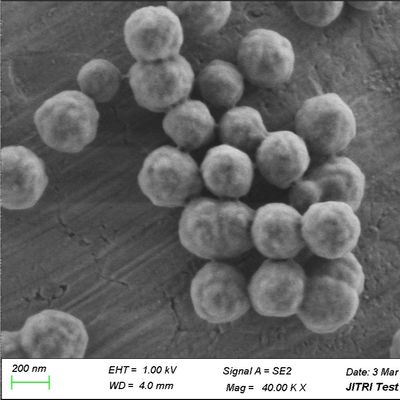
When sourcing beads for a new instrument launch, engineers should prioritize chemical purity. Any trace metals (like Fe³⁺) leaching from the magnetic core can inhibit downstream PCR reactions. Look for beads with a "non-porous" or "encapsulated" silica coating that acts as a true barrier to the iron oxide core.


 Your message must be between 20-3,000 characters!